I am as worried about the future as everyone else is. But what interests me most about the current debate is not which disaster the author forgot to mention, but how deep into causes he or she is going to go, whether they will zero in on the heart of the problem, or just address current manifestations like neoliberalism, failure to connect, lack of humility, lack of democracy etc. An awful lot of words gets published that basically says the same thing. One can only read about a dozen or two essays in favor of more kindness and respect, more attention to nature, more courage in the face of temptation before one feels restless and starts looking at the clock, as if making moral arguments were just another form of bad behavior which it clearly isn’t, but which it becomes if the speaker goes on too long or gets dogmatic.
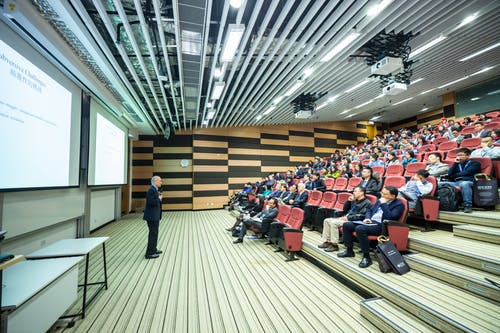
Everyone has his or her own theory about what we did to make the planet a bad place to raise children, and uninhabitable for ourselves and millions of other species. But may I suggest that by the time we listen to six or seven speeches on what’s wrong with humanity we’re going to be pretty numb. In my opinion, speeches are part of the problem.
So at the risk of adding one more faggot to the fire, I want to suggest another way to address what is clearly an ongoing crisis. It does not so much involve persuading people that we need change the way we do things, as showing them a new aspect of the situation and letting it work its way through their consciousness.
I don’t know, of course, if this will help to initiate the transformation that is needed. It may be too slow or too cumbersome to make a difference in the short run. On the other hand, just like effervescent aspirin carries acetaminophen to the bloodstream more quickly than a solid pill, to suddenly see that you are not where you thought you were could be a better way to send a jolt through the system than all the great speeches on TED or dialogues at Cooper Union.

We use words to seduce each other into sharing our model of the way things are. But words accumulate, and after you’ve heard too many of them, you stop processing them because your brain is already full and cannot take in any more. Seeing things for yourself is a much better way to affect a change of outlook. But in order to make sense of what we see, we usually need words. The trick is to time the seeing with the making sense As James Balog said about the melting of the Arctic in the film “Chasing Ice,” “We have a problem of perception. We don’t get it.” We look at those caving icebergs but don’t understand what we are seeing. I want to help people realize the tense drama we are in by showing them something. I want to show them that the universe is watching.
As I have argued elsewhere, perception is buried with us, and it’s going to take a huge act of resurrection to get it going again. Nevertheless, this may not be as difficult as it sounds.
Perception is a Pleasure
First of all, perception is usually a pleasure. Not everything, but most of what we see and hear is a feast. Even the most desolate landscape has something lovely in it, and if what surrounds you is unspeakably awful, your being there to witness bestows an obligation to be extremely attentive to detail. Whatever you do with the disturbing knowledge, you must take care to observe it carefully and commit your knowledge to memory because the world is a happening and every aspect of it counts.
Perception is Both Conscious and Unconscious
Secondly, we are perceiving whether we realize it or not, so to move what we perceive to the center of consciousness means cultivating what Diane Ackerman calls “presence,” what Annie Dillard called “centering down” — a state of mind where we pay close attention to something (a spoon, a moth, a crumpled envelope) and tell the worries and pressures of our lives to go fly a kite. This kind of focusing would be a lot easier to do if instead of telling us to go read or play for an hour, our parents showed us how to look for an hour, or listen. It’s hard to develop a taste for presence if you’ve never done it before. The constant communicating we do now leaves few opportunities for meditation, and public schools these days are hardly places where kids learn how to examine nature with a hand lens.

But savouring the world gets a lot easier if you just pull away from events every once in a while, take a breather, go for a walk, visit unused places. Things are waiting for us to perceive them. If you just give them a few moments of your time, they’ll work on you and cast their amazing spell.

Silence is Golden
Finally, being alone with your thoughts and observations is a joy if you allow yourself not to worry about the past or the future. Earth is beautiful and good, so if you can separate out all the bad things people are doing, the messes they’ve made, and the mistakes they’re about to commit, you have a constant source of hope and beauty that will sustain you time and again. It’s surprising that a taste for simple meditation on the planet never seriously caught on in the West. (Wordsworth tried.) It’s simple. It’s easy, and it doesn’t cost anything. Then again, Western culture is a linguistic culture. We perceive the world through the representational system we use to think with i.e. language, and its derivatives like tv, film, radio. So the idea of exploring silence, of getting away from language so that you can just perceive the world for its own sake, without talk, is foreign, and hard to pull off without considerable preparation. Most of us are too busy trying to survive to take the time to learn how to experience the world firsthand. But if its benefits were more widely known who knows how common it might become?

The Eleusinian Mysteries
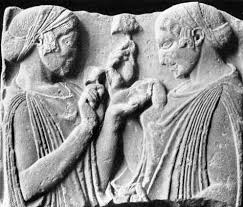
It was not always thus. For example, citizens in 5th century Athens were comforted just by seeing an ear of corn. We still don’t know for sure if that is what they looked at because facts were kept hidden and initiates to the Mysteries were sworn to secrecy. But it is thought that after series of powerful purification rituals, fasts, and torch processions that prepared their minds and cleansed their souls of guilt, pilgrims to Eleusis looked at simple objects – seed cakes, the holy basket of Ceres, an ear of corn — and felt heartened by this evidence that life continues after death. The seed cakes were considered symbols of Demeter’s long search for her daughter Persephone in the underworld. In a way that now seems foreign to our consumerized souls, just the sight of an ear of corn calmed peoples’ fears about dying. Instead of being subjected to a cruel end with no hope for redemption – Homer’s eternity of Being in Hades — they could look forward to the miracle of regeneration.
What Deep Perception Can Show You
I’m not promising comfort from what I want to show you — more likely amazement and awe. But the recognition that where we are is set up like a theatre and we are being watched could make you not want to say anything for at least an hour or two, and that in itself might make you feel less bitter about the pickle we are in. It should at least calm any doubts you may have had about the purpose of human life.
I’m not talking about seeing a map or photograph of the sky. I’m talking about seeing that you are in the sky, that you are on a stage, within what can only be described as a very mysterious setup which has all the features of a theater except that the audience has vanished. It is nowhere to be found. Nevertheless, it looks as if we are being watched. It looks as if we are on a stage. And when you see this, when you see how where we are drops off at the edge, the shock is enough to force a revamp in your head. What’s going on? William Beckett thought there was no audience. But actually to see that there is none is another matter. It changed my life.
Perception needs to be rescued because it is the doorway to this knowledge. What we learn with our senses is very different from what we learn from newspapers and the Internet. It’s the difference between biting into an apple and talking about biting into an apple. We make contact with what actually exists when use our own eyes and ears to examine something or follow an event. Whereas when we read about it in the newspaper or follow it on the radio or TV we are getting a secondary representation of it, a version that has been passed through someone else’s brain and shaped to fit their model of reality.
Wittgenstein and Heidegger
Perception is definitely influenced by language. It’s hard not to see a slab of wood on hinges as something other than a “door” or smell an acrid odour and not think “gasoline” or “skunk.” But the extent to which the secondary representational system we use to think with affects what we see can be controlled. It’s arbitrary. It may not seem arbitrary. It may seem automatic. It may seem as if you can never see or hear something without identifying it on the map we use to organize reality. Wittgenstein and Heidegger wrestled with the difficulty of separating what we see from what we think without much success other than a number of fine books of philosophy.
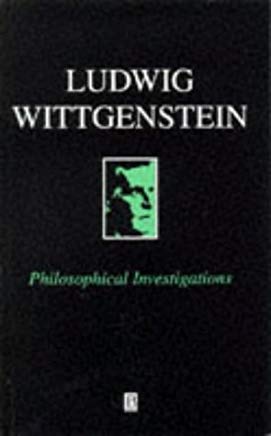
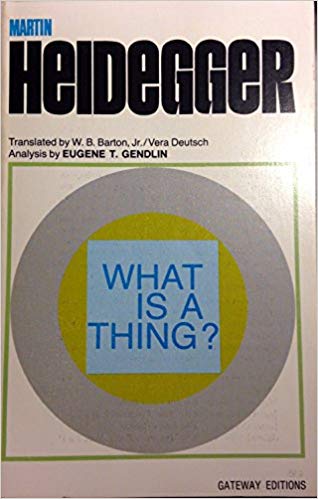
But in my humble opinion that was because they did not respect perception enough. They did not realize that it is another form of knowledge. Perception was buried for them too, though Wittgenstein started to be suspicious. And Heidegger intuitively knew that things were important.
Which meant they had no counter to the perfidious domination of the representational system we use to think with. Language must be controlled because otherwise it will bury perception.
Most People and Philosophers
Of course, most people don’t have this problem. Most people are living so close to the bone they’d like a little relief from perceiving that they are hungry or cold or scared of being blown up by an IED.

But philosophers live mostly at the other end of the social/economic spectrum. They run run the opposite risk. They risk losing touch with the laws of physics that determine things like food and water supply, housing, clean air, etc. Their circumstances are usually comfortable enough that they can sit around and talk. Have ideas. Take plans apart.

You may think I am being simplistic to characterize philosophers in this way, and indeed, I would jump on anyone making a similar claim with examples of novelists, academic sociologists, psychologists, economists etc. who are just as talkative and whose lives revolve around getting verbal constructions preserved for all eternity in a book or article of some sort. But just because others have fallen into the same trap that philosophers have fallen into just goes to show how philosophers set the pace in these matters, and how if there is going to be any kind of shift towards realism among publicly-supported thinkers, philosophy is probably the place to start.
But how do you persuade philosophers (and other thinkers) to stop talking and be more perceptual, i.e. look at where they are?
This is my big thought. My big idea. I want to resurrect perception not by saying it is “iconic” or “non-conceptual” (Ned Block) but by showing people how to find the universe on earth. I want to take them somewhere. However, I have to present my path in stages. I can’t just blurt it out. It’s like the Eleusinian Mysteries. It’s a process. Purification first. Fasting. Ritual. Then step by step through a “thing.” People won’t understand what I want to show them if I just shove a set of directions at them and tell them to take them to the end. That is the linguistic way. It is too wordy and it’s the wrong approach, in any case. I want people to use something that is buried, so I need to de-educate them one word at a time. You must be purified to receive the universe into your brain.
 the universe on earth